If you have ever wondered why the price of tomatoes shoots up in the dry season or why phone prices drop when a newer model comes out — you already understand supply and demand. You just did not know it yet.
Supply and demand is the foundation of economics. Once you truly understand it everything else in economics starts to make sense. Let us break it down simply.
What is Demand?
Demand is the amount of a good or service that buyers are willing and able to purchase at a given price.
The key word here is able. Wanting something is not demand. You must also be able to pay for it.
Real life example: During exam season students want many things — new textbooks, calculators, past question booklets. But only students who can afford them actually buy them. That is demand.
The Law of Demand
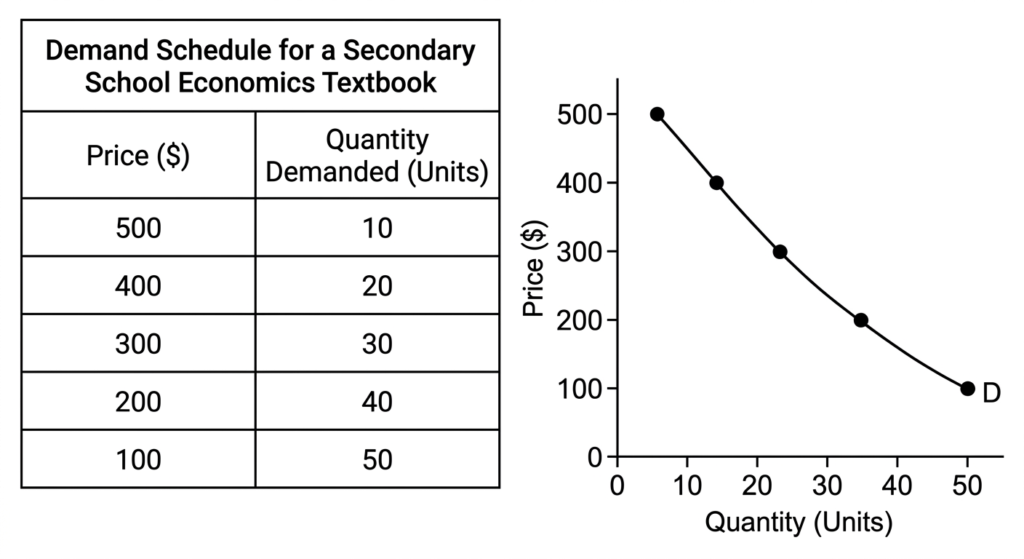
The law of demand states that as the price of a good rises the quantity demanded falls and as the price falls the quantity demanded rises — all other things being equal.
Real life example: When the price of bread goes up from 200 to 500 francs many families buy less bread and switch to other foods. When the price drops back down they buy more again. That is the law of demand in action.
In simple terms: Higher price = fewer buyers. Lower price = more buyers.
What Causes Demand to Change?
Price is not the only thing that affects demand. These factors also shift demand:
- Income — when people earn more they buy more
- Taste and preference — a popular trend increases demand for a product
- Price of related goods — if the price of chicken rises demand for fish goes up as people switch
- Population — more people means more demand
- Expectations — if people expect prices to rise they buy more now
What is Supply?
Supply is the amount of a good or service that producers are willing and able to offer for sale at a given price.
Real life example: A farmer in the rainy season has plenty of maize to sell. He is willing to supply large quantities. In the dry season his harvest is small and he has less to offer. That is supply changing with conditions.
The Law of Supply
The law of supply states that as the price of a good rises producers are willing to supply more of it and as the price falls they supply less.
Real life example: When the price of palm oil rises many farmers plant more palm trees and produce more oil because the profit is attractive. When the price falls some farmers stop producing because it is no longer worth their effort.
In simple terms: Higher price = more producers willing to sell. Lower price = fewer producers willing to sell.
What Causes Supply to Change?
These factors shift supply:
- Cost of production — if fuel prices rise transport costs go up and supply falls
- Technology — better farming equipment increases supply
- Number of producers — more businesses entering a market increases supply
- Government policy — taxes reduce supply, subsidies increase it
- Weather and natural factors — a good rainy season increases food supply
How Supply and Demand Work Together
The magic happens when supply and demand meet. The point where the quantity buyers want to buy equals the quantity sellers want to sell is called the equilibrium price or market price.
Real life example: At the local market the seller of groundnuts wants to sell at 500 francs per cup. Buyers want to pay 300 francs. They negotiate and settle at 400 francs. That 400 francs is the equilibrium price — the point where both sides agree.
What Happens When Supply and Demand Change?
Scenario 1: Demand rises, supply stays the same Price goes up. Example: During Christmas demand for chicken rises sharply. Sellers raise prices because buyers are competing for the same amount of chicken.
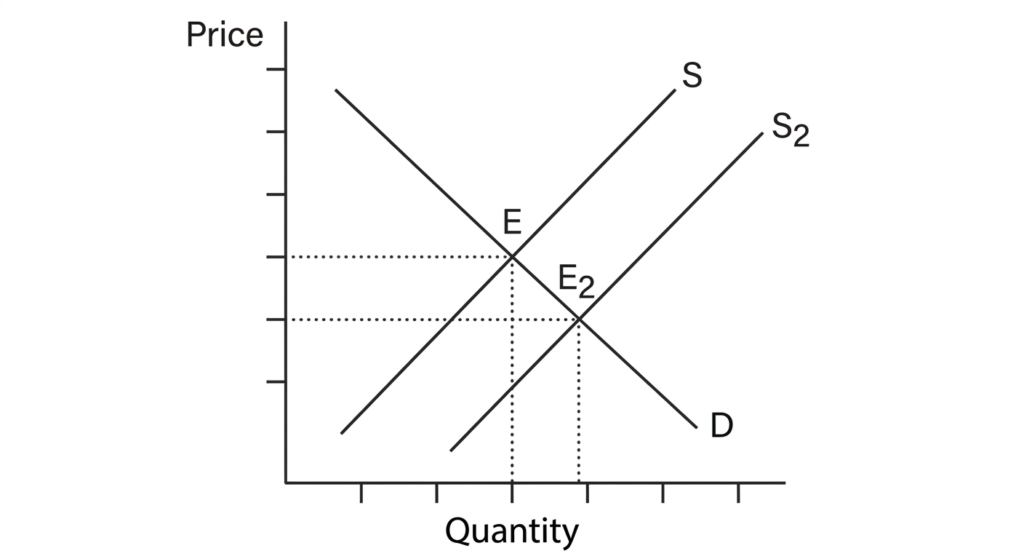
Scenario 2: Supply rises, demand stays the same Price goes down. Example: After a good harvest maize floods the market. Too much supply and not enough buyers pushes prices down.
Scenario 3: Both rise equally Price stays roughly the same but more goods are bought and sold.
Past Questions
Question 1: Explain the law of demand and illustrate with a demand schedule and demand curve.
How to answer: State the law clearly — as price rises quantity demanded falls. Draw a simple table showing price and quantity at different levels. Then sketch a downward sloping curve with price on the vertical axis and quantity on the horizontal axis. Label both axes and the curve.
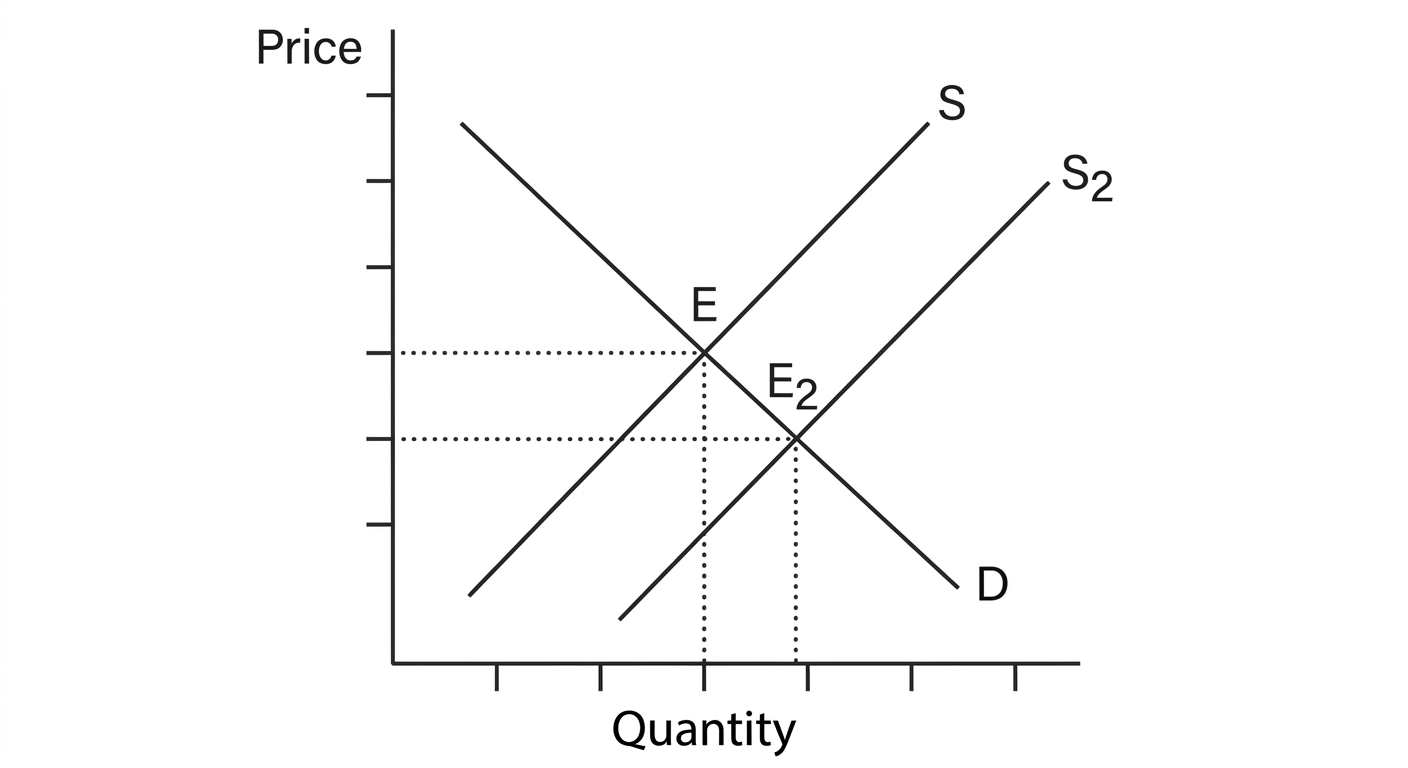
Question 2: With the aid of a diagram explain what happens to the equilibrium price when the supply of a commodity increases while demand remains constant.
How to answer: Draw a supply and demand diagram. Show the original equilibrium where the two curves cross. Then draw a new supply curve shifted to the right showing increased supply. Show how the new equilibrium sits at a lower price. Explain that when supply increases and demand stays the same prices fall as sellers compete for buyers.
Question 3: State and explain four factors that can cause a change in the demand for a commodity.
How to answer: List four factors from the section above — income, taste, price of related goods, population. For each one write two to three sentences explaining how it affects demand with a practical example.
Conclusion
Supply and demand is not a complicated theory. It is simply a description of how buyers and sellers behave every day in every market around you. The next time you see prices change at the market you will know exactly why.
For more economics revision read our posts on related economics topics and test yourself with our economics past questions.
Ready to test your understanding? Take our free supply and demand quiz now.